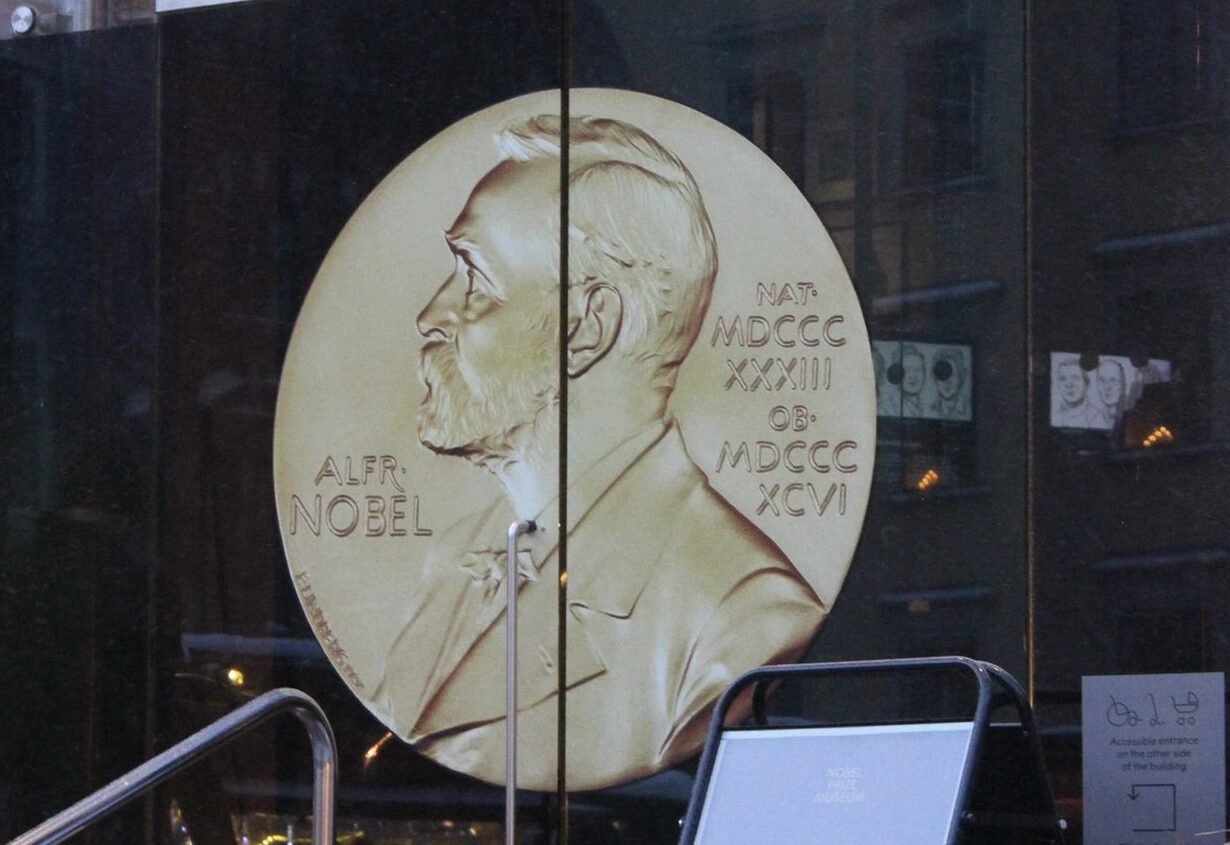
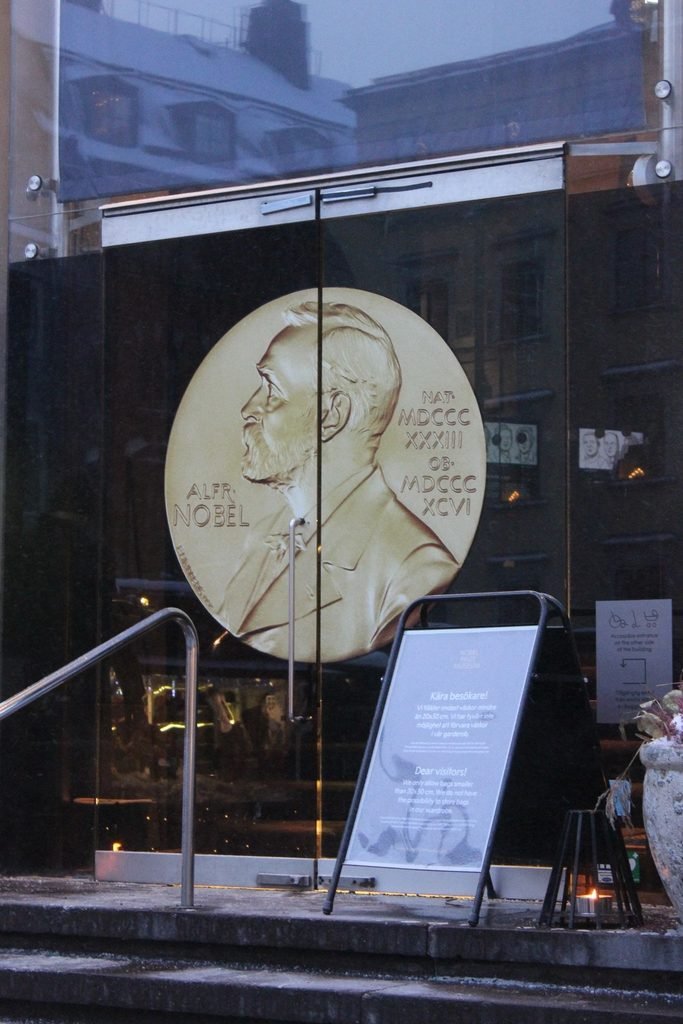
Entrance to Nobel Museum at Stortorget, Gamla Stan, Stockholm
Alfred Bernhard Nobel is a name synonymous with achievement and excellence, thanks to the prestigious Nobel Prizes. But who was the man behind this global legacy? A chemist, engineer, and inventor, Nobel’s personal life was as fascinating and complex as his groundbreaking scientific contributions.
Alfred Nobel was born on October 21, 1833, in Stockholm, Sweden, into a family of engineers and innovators. His father, Immanuel Nobel, was a skilled engineer and inventor, while his mother, Andriette Ahlsell, came from a wealthy family. Nobel was one of eight children, but only Alfred and three of his siblings survived past childhood due to financial hardship and health crises.
The family moved to Russia in 1842, where Immanuel established a successful armaments business. This prosperous period exposed young Alfred to the scientific and industrial world, laying the foundation for his future endeavors.
Not only was Alfred Nobel a brilliant science minded kid, but also a linguistic prodigy. By the time he was an adult, Nobel was fluent in six languages: Swedish, Russian, English, French, German, and Italian. He cultivated his passion for literature and writing, often penning poetry and plays.
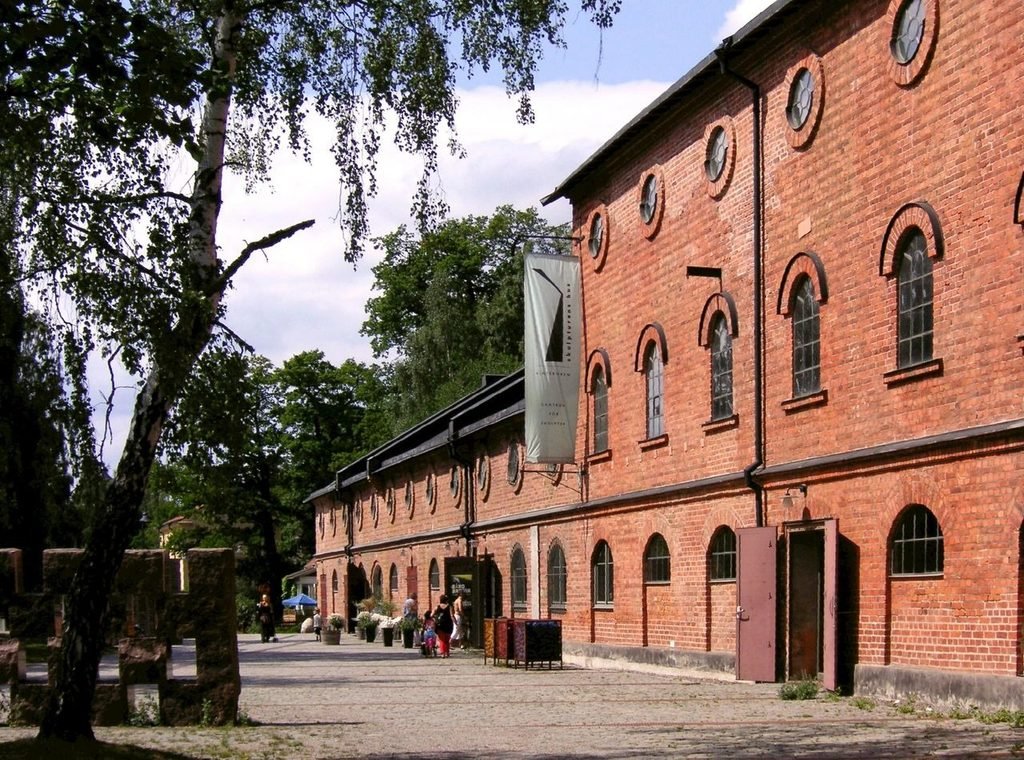
Vintervikens dynamite factory
As a chemist, Alfred Nobel’s scientific career was both groundbreaking and controversial. After studying chemistry under renowned scientists in Paris and the United States, Nobel returned to Sweden and focused on explosives engineering. His most significant contribution was the invention of dynamite in 1867. This invention revolutionized industries like mining and construction, but it also earned Nobel the moniker “merchant of death” due to its destructive use in warfare. Fun fact: he owned the company Bofors, which went from being an iron and steel producer business to a manufacturer of cannons and armaments. It is said that despite his vast fortune from patents and business ventures, Nobel carried a burden of guilt about the impact of his creations, a guilt that would later shape his legacy.
Nobel never married, and his personal life was marked by loneliness and emotional complexity. He did, however, form close relationships with several women. One of the most notable was Bertha von Suttner, an Austrian pacifist who briefly worked as his secretary. Although their romantic relationship was short-lived, their intellectual bond endured. Bertha’s staunch advocacy for peace is said to have inspired the creation of the Nobel Peace Prize.
There is a popular, however fake, rumor that Nobel’s fiancée was cheating on him with a mathematician, being the reason for the lack of a Math Prize. This story appears to be a conflation of different accounts, and there’s no concrete evidence to support it. However, Nobel’s diary entries reveal a deep sense of betrayal and disappointment in his personal relationships, hinting at a troubled romantic life.
The turning point in Nobel’s life came in 1888 when a French newspaper mistakenly published his obituary with the headline: “The Merchant of Death is Dead.” The obituary condemned Nobel for profiting from weapons of war, leaving him to contemplate how he would be remembered. This realization led Nobel to draft a will in 1895, one year before his death. In it, he dedicated the majority of his fortune to establish the Nobel Prizes. The will specified five categories: Physics, Chemistry, Medicine, Literature, and Peace, recognizing individuals and organizations whose work benefited humanity.
When Alfred Nobel passed away on December 10, 1896, in San Remo, Italy, his revolutionary vision for the Nobel Prizes ensured that his name would forever be associated with human progress and peace.
Want to learn more about how Nobel established the Nobel Prizes in his will? Check out our previous post on the matter: Nobel Prize Week – honoring excellence across the globe – XperienceSthlm
Written by Oscar Peña