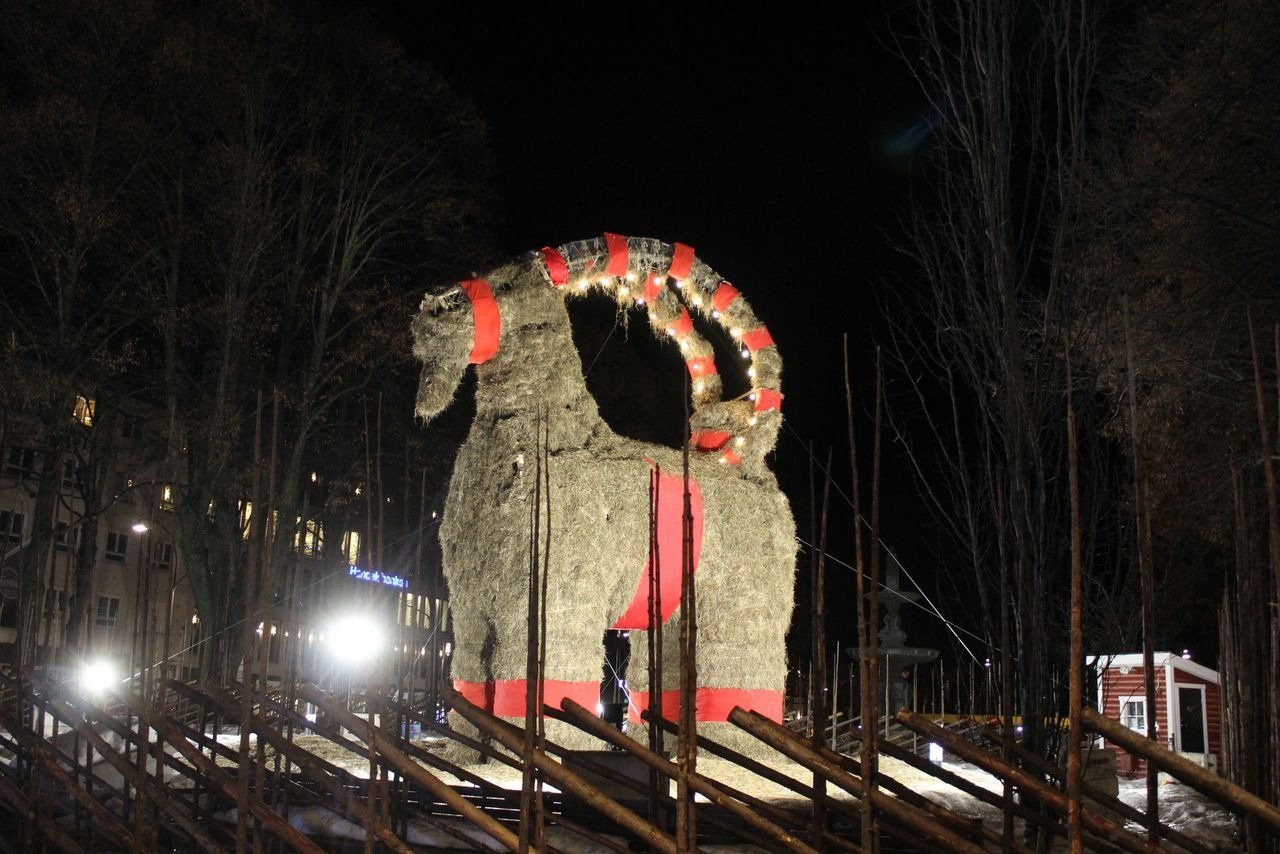
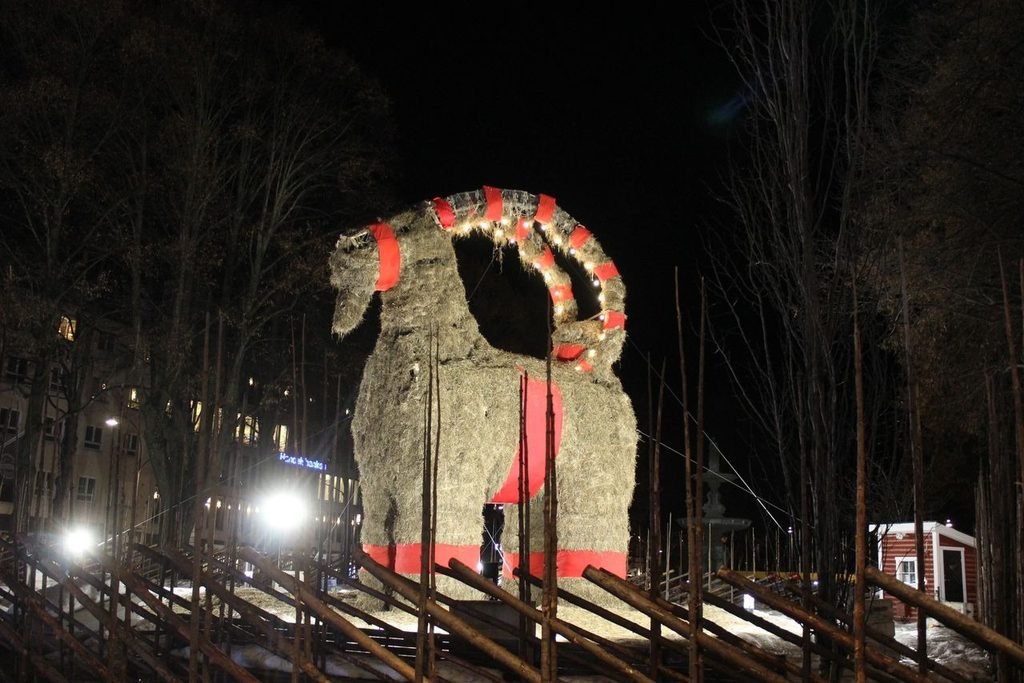
In the heart of Sweden, in the picturesque town of Gävle, stands a seemingly innocent giant straw goat that has captured the attention of locals and the world alike. This iconic structure, known as the Gävle Goat, has become synonymous with the Christmas season in Sweden, yet its fate hangs in the balance every year as mischievous individuals attempt to set it ablaze.
The Gävle Goat has a long and fascinating history, dating back to 1966 – when it was first erected in the town’s Castle Square. Standing at an impressive height of 13 meters, the goat is constructed entirely of straw and adorned with red ribbons and lights, making it a majestic and festive symbol of Christmas. The inspiration behind this tradition can be traced to the ancient Swedish folklore of the Yule Goat, a creature said to assist the benevolent gift-giver (even Santa Claus needs a little help) during the holiday season.
Despite its cheerful appearance, the Gävle Goat has faced an unusual and somewhat dangerous threat throughout its existence – people attempting to set it on fire. This seemingly absurd act has become a bizarre annual tradition among Swedes, with vandals attempting to turn the beloved straw structure into a towering inferno.
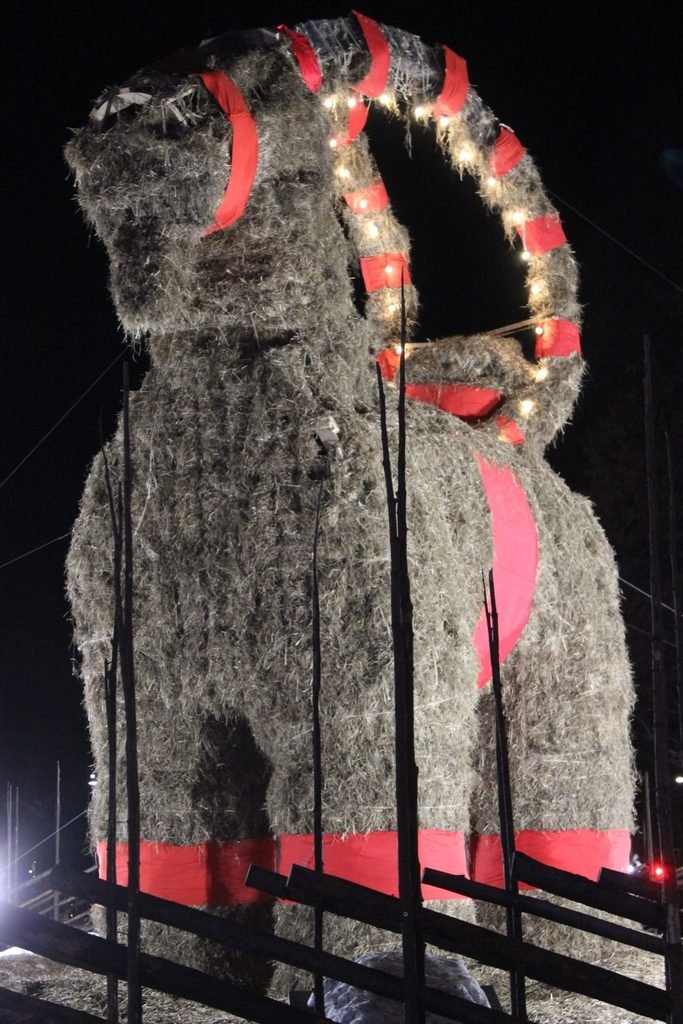
It is illegal to burn the Gävle Goat, and the authorities have taken extensive measures to protect this cultural icon. Security measures include 24/7 surveillance, a fence surrounding the goat, and even the use of flame-retardant materials in its construction. However, the resilient vandals have managed to outsmart these efforts, setting the goat ablaze more than once over the years.
The Gävle Goat has faced a fiery fate more times than one would expect. Despite the town’s best efforts to protect this holiday symbol, it has burned down numerous times. The goat has survived some years unscathed, standing tall as a beacon of holiday cheer, while other years have seen it succumb to the flames, reduced to a charred skeleton. The Gävle Goat had faced destruction in 37 out of its 55 years of existence. The numbers may have changed, so it’s always intriguing to discover whether the goat has managed to elude the fiery fate in recent years.
The Gävle Goat’s connection to Christmas goes beyond its role as a festive decoration. In Nordic folklore, the Yule Goat has ancient roots, believed to have been a companion of the Norse god Thor. This mythical creature was said to help deliver gifts during the Yule season, a tradition that evolved into the modern-day association of goats with Christmas in the Nordic countries.
Moreover, the Vikings, known for their rich traditions and mythology, had their own winter celebrations. The Yule festival, a pagan festival lasting twelve days, played a significant role in Viking culture. Elements of these festivities, including the Yule Goat, have been woven into the tapestry of modern Christmas traditions.
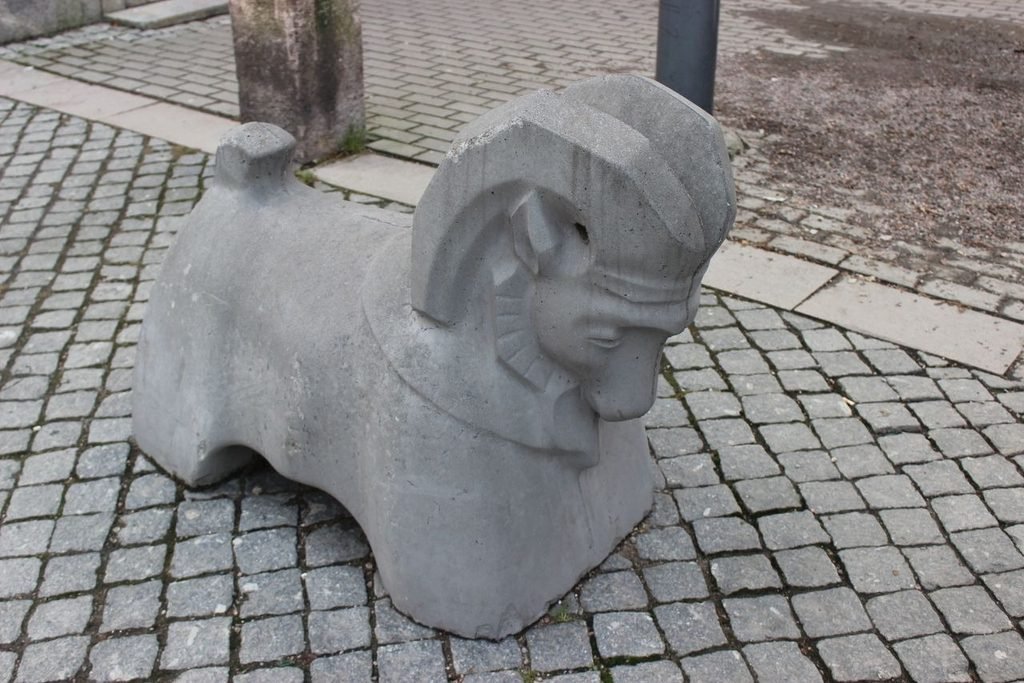
While the Gävle Goat has its origins in Swedish folklore, there are intriguing connections between this straw creation and the global figure of Santa Claus. Santa Claus, derived from the Dutch figure Sinterklaas, has his own set of reindeer to pull his sleigh. However, the image of a goat-drawn sleigh is not entirely foreign in Christmas lore. In some Scandinavian traditions, the Yule Goat was believed to assist Santa Claus in his gift-giving duties. This collaboration, though not as widely recognized as the reindeer-led sleigh, adds an extra layer of charm to the Gävle Goat’s role in the holiday season.
The Gävle Goat stands as a symbol of holiday joy, embodying centuries-old traditions and folklore. Its story is a testament to the resilience of cultural symbols, even in the face of repeated attempts to diminish their significance. As we approach each holiday season, the people of Gävle continue to celebrate their iconic goat, hopeful that it will endure as a beacon of festive cheer for generations to come, flames notwithstanding.
Written by Oscar Peña